
What Is Search Engine Marketing? A Beginner’s Complete Guide to SEM
Every time you type something into Google — “best running shoes under ₹3000” or “affordable home service near me in Kolkata” — you notice a few results sitting right at the top, tagged with a small “Sponsored” label. Those aren’t ranking there by luck or because that business is the most popular. A business pays to appear exactly when you search for something they sell. That is search engine marketing at work — and it’s one of the most powerful tools in digital advertising today. If you’ve been wondering what search engine marketing is, how it works, and why brands of all sizes spend serious money on it, this guide walks you through everything. From the basics of SEM to how it compares with SEO, you’ll leave with a clear picture.
What Is Search Engine Marketing, Really? Let’s Break It Down
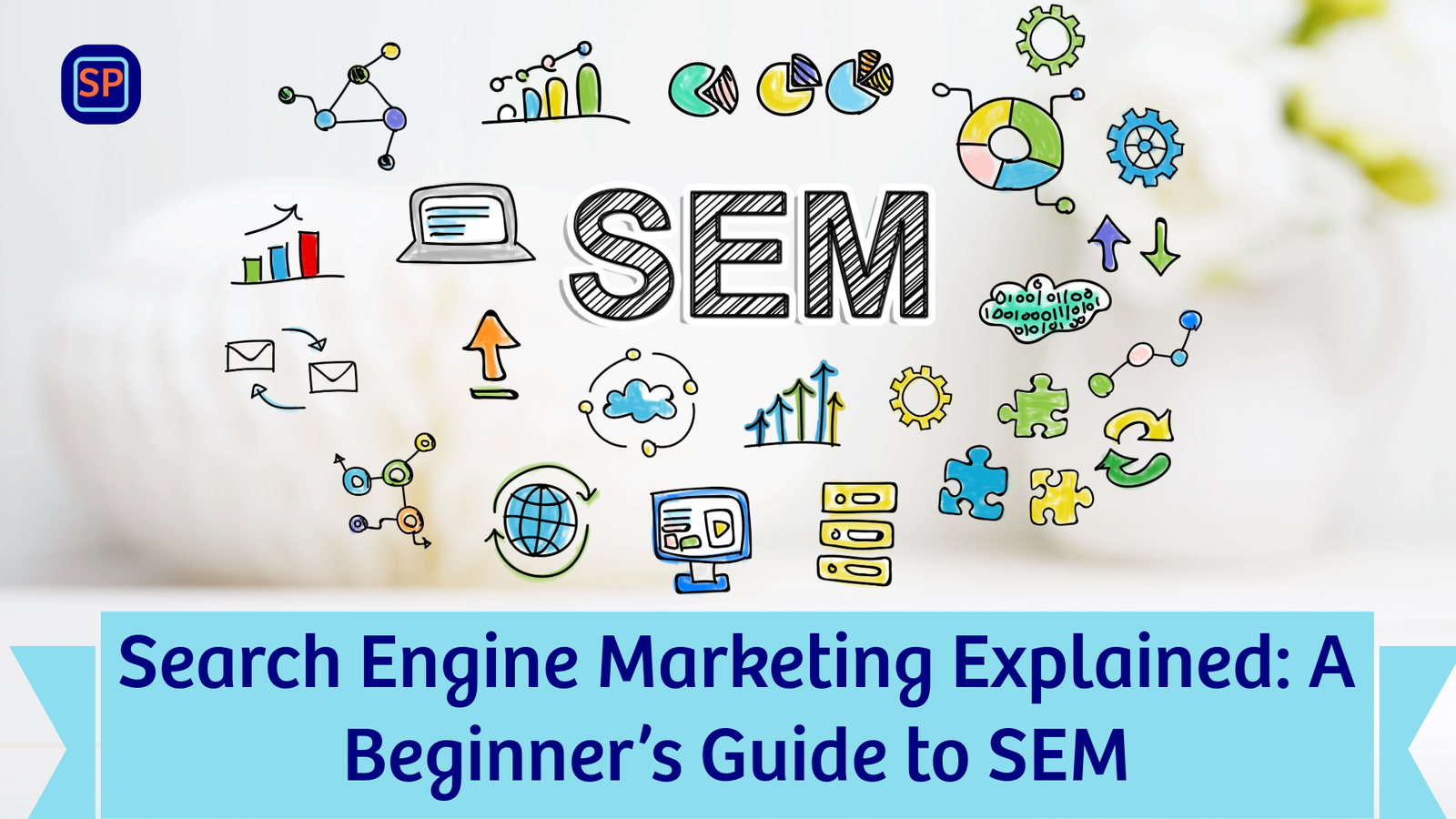
Search engine marketing (SEM) is a paid digital advertising strategy that places your business on search engine results pages (SERPs) — right when someone searches for a product or service like yours. In plain terms: instead of waiting to rank organically, you pay to show up.
The concept has a surprisingly specific origin. The first pay-per-click (PPC) ads were built by a company called OpenText Corporation. But the term “search engine marketing” wasn’t officially coined until 2001, when technologist and journalist Danny Sullivan used it in an article for his search engine marketing publication. That moment gave the practice its identity as a standalone marketing discipline.
Today, SEM almost exclusively refers to paid search advertising. You’ll hear it called by several names — paid search marketing, search engine advertising, online search advertising, or simply PPC — but they all describe the same core idea: bidding on keywords so your ads appear when users search those terms on platforms like Google.
Here’s what a basic SEM setup looks like:
- You research and select keywords that your target customers are likely to type into a search engine
- You write ad copy — a headline, a short description, and a link — that appears when those keywords are searched
- You set a maximum bid: the highest amount you’re willing to pay each time someone clicks
- You pay only when an actual click happens — not just when your ad appears
For businesses in India, Google is the dominant platform for search engine ads by a significant margin. Google holds over 98% of the search engine market share in India, making it the primary ground for any SEM campaign in this market.
Why Businesses in India Are Choosing SEM Over Traditional Advertising
India’s digital advertising landscape has shifted dramatically. According to the ET Brand Equity–Ipsos State of Digital Advertising 2025-26 report, digital advertising now commands 44% of India’s total ad spend — ₹49,000 crore — overtaking television for the first time and recording 20% year-on-year growth. Within that, paid search marketing holds a significant and growing share.
Search advertising in India is projected to grow from US$1.9 billion in 2024 to US$2.9 billion by 2028, according to Statista. So what’s driving businesses — from a bootstrapped D2C startup in Bengaluru to a regional retailer in Ahmedabad — to put money into SEM? Several things make it distinctly different from other ad formats.
You Reach People at the Exact Moment They Want Something
Most advertising interrupts. A TV commercial plays during your show. A social media ad slides in between posts. SEM is designed differently. When someone searches “buy laptop bag online India” or “dermatologist in Pune,” they already want something. Your ad appears precisely at that moment of intent — not before, not after. That intent alignment is what makes paid search advertising so effective at driving conversions.
Results Don’t Wait Months to Arrive
Unlike SEO, which takes sustained effort over months before rankings move, SEM campaigns can go live within hours of setup. For a new product launch, a seasonal offer, or a limited-time promotion, that speed is not a luxury — it’s a requirement.
Every Rupee Is Accountable
SEM runs on a pay-per-click model. You don’t pay just for your ad to be seen — you pay only when someone actually clicks and visits your site. This makes your marketing spend directly trackable. If the clicks aren’t converting, you adjust. If a keyword is pulling in leads, you increase its budget. The level of control here is something traditional media simply can’t offer.
Targeting Goes Deeper Than Most People Realise
SEM platforms let you target by city, pin code, device type, time of day, and user demographics. A homemade food brand in Koramangala can restrict its ads to people in that area searching for “home-cooked tiffin service.” That kind of precision targeting is a major reason why businesses choose paid search advertising over broader ad formats.
You Get Real Data, In Real Time
Every SEM campaign surfaces live metrics — clicks, impressions, cost per click (CPC), and conversion data. This means you’re never flying blind. You can pause what’s not working, double down on what is, and constantly refine your approach based on actual evidence, not guesses.
How Search Engine Marketing Works: From Keyword to Click
The mechanics behind SEM aren’t complicated once you break them down into steps. Here’s how the process actually runs, from the moment a user types a query to the moment your ad earns a click.
- Keyword Research
Everything in SEM begins with keywords. These are the specific words and phrases your potential customers type into a search engine when they need something. Before launching any campaign, marketers spend time identifying which keywords strike the right balance between search volume (how often people search them) and competition (how many other advertisers are bidding on them).
Broad keywords like “shoes” get millions of searches but cost more and attract a wide, less targeted audience. More specific keywords like “men’s leather loafers under ₹2000” attract fewer searches but tend to bring in buyers who know exactly what they want. Finding that balance is where keyword research becomes an art. - Step 2: Writing the Ad
Once keywords are selected, you write the ads themselves. A standard text-based search ad has three parts:
> Headline: The bold, clickable link that users see first
> Description: One or two lines explaining your offer or what makes you worth clicking
> Display URL: The web address where the user lands after clicking
Text ads are relatively quick to produce, which is one reason SEM campaigns can be up and running faster than most other advertising formats. - The Ad Auction
Here’s where it gets genuinely interesting. Every time a user searches on Google, an automated auction runs in milliseconds. Multiple advertisers compete for the same keyword. But — and this matters — the highest bid doesn’t automatically win.
Google factors in a Quality Score alongside your bid. Quality Score is determined by the relevance of your ad to the keyword, the quality of your landing page, and your historical click-through rate. A well-written, highly relevant ad from a smaller business can genuinely outrank a poorly optimised campaign from a much bigger spender. This levels the playing field considerably. - Paying Per Click
When your ad wins the auction, and a user clicks it, you pay a cost per click (CPC). The CPC varies based on your industry, keyword competition, and targeting settings. This process repeats every time the keyword is searched until your daily or campaign budget is exhausted.
The data here is compelling. According to research compiled by DemandSage, Google Ads results receive 65% of clicks on keywords with purchase intent — outperforming organic results. Additionally, 43% of users have reported purchasing after seeing a search ad. That’s direct revenue attribution — not vanity metrics. - Tracking Performance
Once your campaign is live, you track a handful of key metrics:
> Click-through rate (CTR): The percentage of people who clicked your ad after seeing it
> Impressions: How many times your ad was displayed in search results
> Conversions: How many users completed a desired action — a purchase, a call, a form submission — after clicking
These metrics tell you exactly what’s working and what needs fixing, letting you optimise continuously.
SEO vs SEM: What’s the Difference and Which One Is Right for You?
If you’ve spent any time reading about digital marketing, you’ve come across both SEO and SEM — and probably wondered whether they’re the same thing, different things, or whether one makes the other pointless. They’re related but fundamentally different in how they work and when you should use them.
SEO (search engine optimisation) is the process of building and optimising your website so it earns organic rankings on search engines — without paying for placement. It’s a long-game strategy: the effort you put in today may take months to show up in rankings, but the traffic you earn can keep coming long after you stop actively working on it.
SEM, as we’ve covered, is paid. You bid for placement and pay per click. Stop paying, and the traffic stops.
Here’s a clear side-by-side breakdown, drawn from Semrush’s comparative analysis:
| Factor | SEM | SEO |
|---|---|---|
| Speed of results | Hours to days | Months to years |
| Cost model | Pay per click — ongoing spend | Investment in content and technical optimization |
| Traffic durability | Stops when budget runs out | Can continue long after content is published |
| Level of control | Full control over timing, placement, and messaging | Limited control over when rankings appear |
| Best suited for | Product launches, seasonal campaigns, competitive markets | Long-term brand building, authority-driven growth |
Neither is universally better. The right answer depends on where your business is right now and what you need.
If you’ve just launched a new product line and need sales this month, SEM is the faster path. If you’re building a brand for the long term, want sustainable traffic without recurring ad costs, and are willing to invest in content, SEO deserves serious attention.
Can You Use Both?
Absolutely — and many successful businesses in India do. SEM drives immediate, measurable revenue while SEO builds a foundation that keeps delivering over time. Running both is not redundant; it’s strategic. SEM data (which keywords are converting, which ad copy gets the most clicks) can directly inform your SEO content strategy, making both channels sharper.
Frequently Asked Questions
Search engine marketing is a way for businesses to display paid ads on search engines like Google when users search for keywords related to their product or service. You pay a fee each time someone clicks your ad — and you only pay when a click happens.
SEO focuses on earning organic rankings through quality content and website optimisation — no paid placement. SEM involves bidding for ad spots in search results. SEO is a long-term investment; SEM delivers faster, more controllable results but requires ongoing budget.
Google Ads is the dominant SEM platform in India — holding over 98% of the country’s search market — but SEM also includes platforms like Microsoft Advertising (Bing Ads). In India, Google Ads is where the vast majority of search engine marketing happens.
There’s no fixed minimum. Costs depend on your industry, the competitiveness of your keywords, and your targeting. A local business targeting a specific city can start with a modest daily budget and scale up based on what the data shows. The CPC (cost per click) model means you control spending from day one.
Yes — this is one of SEM’s real strengths. Because you control your budget, bidding, and targeting down to pin-code level, even small businesses with limited ad spend can run focused, effective campaigns by concentrating on specific, local keywords with lower competition
I like how this article explains SEM in simple terms instead of jumping straight into technical jargon. The comparison between paid visibility and waiting for organic rankings is especially helpful for beginners, and it’s worth mentioning that understanding search intent is just as important as budget when running successful SEM campaigns.