Will AI Replace Digital Marketers? What Beginners Need to Know
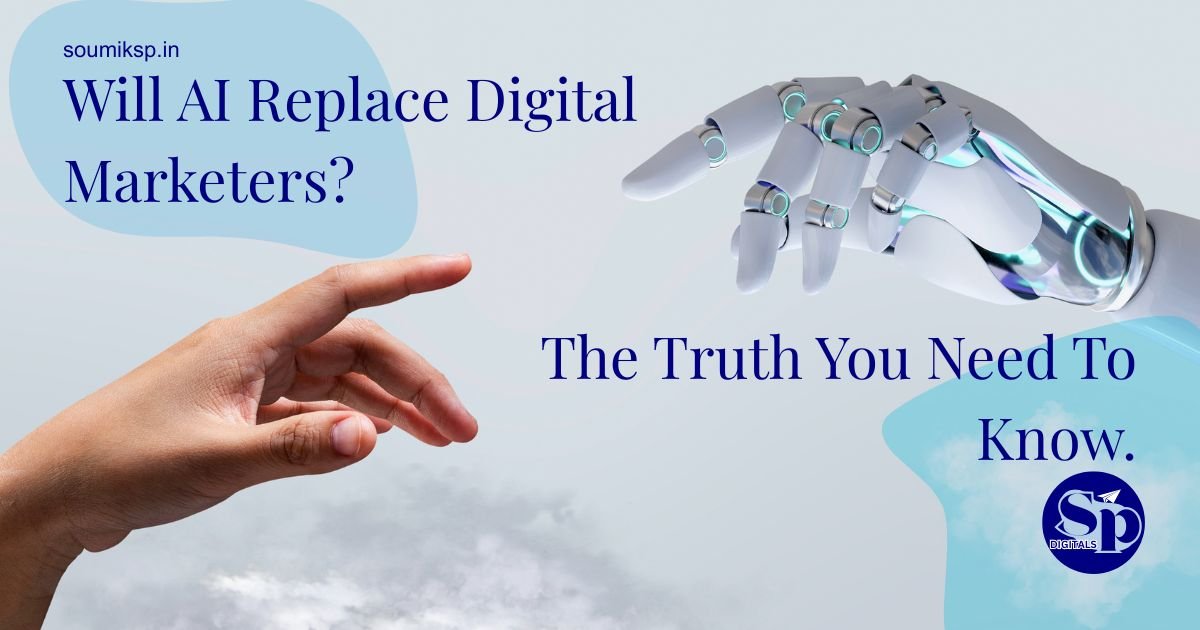
Imagine spending months studying SEO frameworks, practising headline formulas, or saving up for a digital marketing bootcamp, only to open your laptop and see a headline claiming an AI bot can do your future job in three seconds flat. If you are a recent graduate, a career switcher, or a professional looking to transition later in your career, it is completely natural to feel anxious. You are likely asking yourself a critical question: Will AI replace digital marketers before I even have a chance to build a career?
Let’s clear the air immediately: No, AI is not going to replace digital marketers. However, it is completely reshaping how marketing works. This post will give you an honest look at the state of AI in marketing, break down what machines can (and can’t) do, look at how specific roles are changing, and show you exactly how to build an irreplaceable skill set.
How is AI Actually Used in Digital Marketing Right Now?
To understand why your career choice is safe, you first need to look at how marketing teams are actually deploying artificial intelligence. According to HubSpot’s 2026 State of Marketing Report, a massive 86.4% of marketing teams use AI in their workflows, transforming it into a standard industry utility rather than a fringe tool.
AI is not acting as an independent employee; it is acting as a highly efficient assistant. Marketers use it to handle repetitive, high-volume tasks that used to eat up hours of the workday:
- Data Analysis & Predictive Analytics: AI software can scan thousands of customer data points in seconds, identifying purchasing trends or predicting which audience segment is most likely to buy a new product.
- Workflow Automation: Managing automated email drip campaigns, tracking user behaviour on websites, and executing basic programmatic ad bidding are all handled smoothly by machine algorithms.
- Initial Ideation: Marketing teams regularly use large language models (LLMs) like ChatGPT, Claude, or Google Gemini to generate 50 blog post ideas, draft basic social media copy variants, or outline complex campaign structures in seconds.
When you learn how to use AI to improve digital marketing, you aren’t training your replacement. You are learning how to automate the tedious parts of your job so you can focus entirely on high-level strategy.
AI vs Human Digital Marketers: Where Humans Win
If you look at the debate surrounding AI vs human digital marketers, it helps to use a simple analogy: AI is like a brilliant, lightning-fast intern. It can pull up data or write a basic report instantly, but it lacks life experience, makes strange logical leaps, and always needs an experienced manager to double-check its work.
The algorithms driving these tools are fundamentally backwards-looking. They analyse historical text and data to predict what word or pattern should come next. Because of this math-based approach, we run into severe limitations of AI in marketing:
- Lack of Cultural Nuance and Real Taste: An AI doesn’t know what it feels like to grab a morning coffee, experience economic inflation, or watch a meme go viral in real-time. It cannot naturally capture a specific brand’s unique point of view or cultural timing.
- The Problem of Hallucinations: AI tools frequently invent false facts, misquote data sources, or generate broken links. Relying on them without human editing ruins brand trust instantly.
- The “Average” Content Trap: Because AI generates content based on existing internet data, pure AI content sounds incredibly generic. In 2026, the brands winning organic traffic are the ones avoiding this robotic fluff and leaning into deep human perspectives.
Ultimately, the human touch in digital marketing is your ultimate shield. Marketing is the art of connecting human emotions to commercial products. A machine can analyse the data, but only a human truly understands the person on the other side of the screen.
The Micro-Look: Can AI Replace Creative Copywriting and SEO?
It’s easy to look at the broad industry and feel okay, but what about specific entry-level roles? Let’s take a closer look at two areas that beginners often target.
Can AI Do Copywriting?
Many beginners fear that generative AI spells the end for writers. The reality is that AI has raised the floor but hasn’t touched the ceiling. Anyone who writes low-effort, generic text is indeed at risk. However, businesses are actively searching for skilled copywriters who can inject genuine emotion, conduct deep human interviews, and edit raw AI drafts into compelling, high-converting brand stories. The job is shifting from raw content drafting to content curation, editing, and voice strategy.
Will ChatGPT Replace SEO Specialists?
With the rise of Google’s AI Overviews and conversational answer engines like Perplexity, traditional SEO is changing rapidly. Nearly 30% of marketers have noticed drops in traditional search traffic as users turn to conversational bots.
But this does not mean SEO is dying; it means the field is evolving into Answer Engine Optimisation (AEO). Companies desperately need search experts who understand how to make a brand’s website authoritative and trustworthy enough to be cited inside AI search summaries. Keyword stuffing is dead, but semantic SEO and user experience strategy are more valuable than ever.
Essential Skills Digital Marketers Need to Stay Irreplaceable
If you want to ensure that your career remains robust and highly paid, you need to develop the specific skills digital marketers need in the age of AI. Shift your focus away from manual execution and lean heavily into these core competencies:
- Advanced Prompt Engineering: You must master the art of speaking to AI. Learning how to write precise, multi-layered prompts allows you to treat tools as advanced engines that yield high-quality, tailored marketing assets on the first try.
- Strategic Data Interpretation: AI can hand you a spreadsheet of 10,000 user clicks, but it cannot tell you why a customer felt hesitant at checkout. Your value lies in looking at data patterns and turning them into real-world business choices.
- Conversion Rate Optimisation (CRO): Understanding human psychology, building seamless user journeys, and structuring persuasive landing pages are highly creative tasks that require deep empathy and behavioural insights.
How to Pivot: Becoming an AI-Driven Marketer
The truth of modern marketing is simple: AI will not replace you, but a marketer who knows how to use AI will. Data from a June 2026 LinkedIn labour market index shows that marketing job postings requiring explicit AI literacy skills have surged by 113% year-over-year. The market isn’t shrinking; it is demanding a new kind of professional.
To hit the ground running, start exploring AI marketing tools for beginners to build your practical portfolio:
- ChatGPT & Claude: Use them to practice brainstorming, content remixing, and developing target audience avatars.
- Canva AI: Great for beginners to understand how AI-assisted visual design assets fit into rapid social media workflows.
- HubSpot AI Tools: Excellent for learning how automation integrates directly into customer relationship management (CRM) systems and email marketing.
The future of digital marketing jobs belongs to the hybrids—professionals who pair human intuition, ethics, and emotional intelligence with the sheer operational speed of automation software.
The Bottom Line: Why the Future Still Belongs to You
The structural shift taking place across the internet can feel intimidating, but it is actually an incredible equaliser for beginners. AI tools strip away the technical barriers to entry, handling the heavy lifting of data crunching and draft writing so you don’t have to spend years mastering manual coding or basic formatting.
Stop asking if AI will replace digital marketers, and start focusing on how you can use it to become twice as efficient as the competition. By pairing your innate human empathy, creative instinct, and cultural perspective with modern automation tools, you will build a vibrant, satisfying career that no algorithm can ever touch.
Frequently Asked Questions
> Yes, digital marketing is still an exceptionally resilient and rewarding career choice, provided you focus on learning strategy alongside execution. While the manual execution of repetitive tasks is being automated, businesses still need humans to manage the tools, build brand trust, interpret complex analytics, and maintain strong client relationships.
> No. High-level leadership, creative direction, brand positioning, and overall business strategy rely heavily on human relationships, emotional intelligence, and real-world market empathy. AI models do not possess conscious experiences or genuine market intuition; they can only suggest options based on past patterns.
> AI is not driving down wages across the board; rather, it is widening the gap between low-skill text-generators and strategic operators. Marketers who rely purely on basic, low-effort execution may see less demand, whereas beginners who enter the field with strong AI literacy and strategic insight can actually command a premium because they deliver faster results.
I like the distinction you made between AI replacing tasks and AI replacing marketers. The point that AI is becoming a powerful assistant rather than an independent employee is important, especially for beginners who may be worried about entering the field. The real advantage seems to come from combining AI efficiency with human skills like strategy, audience understanding, and creative decision-making.